This article on Home Living Handbook might contain affiliate links. If you make a purchase through a link on the site, we may earn a commission.
Is winter on its way? Don't forget to protect your garden hose, outdoor faucet, and water system from freezing temperatures.
"When hoses remain attached during freezing weather, water trapped inside the hose or faucet can freeze, expand, and create pressure that can cause pipes to crack and burst," shared Shaylin King, Owner, Mr. Rooter Plumbing of Tri-Cities, Yakima, Hermiston. "Remove and store hoses and shut off the outdoor water supply. Open the exterior faucets to let any remaining water drain out."
Taking precautions is important! Learn what you need to do today to prevent damage during the winter months.
1. Turn Off the Water Spigot and Disconnect the Hose
Start by turning off the water supply to your outdoor faucet or water supply tap.
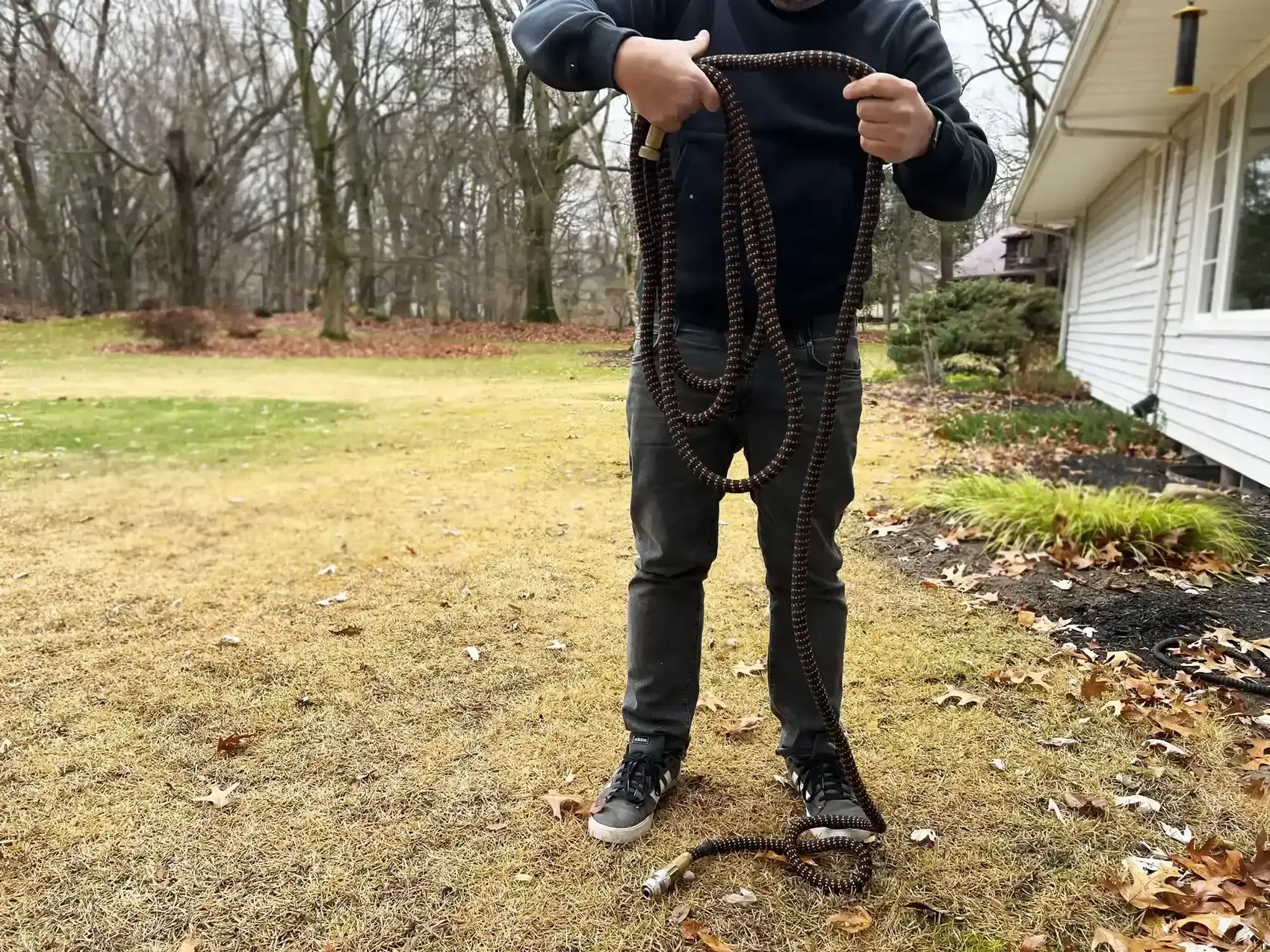
Then, disconnect the garden hose and let the water drain completely. Remove any spray nozzle head, nozzle trigger, or other hoses and connectors.
To drain it, lift one end higher than the other so the remaining water flows out. Leaving water trapped inside increases the risk of frozen pipes or a burst pipe once freezing temperatures hit.

2. Store the Hose Indoors
Coil and move your water hose into a protected area (like a garage, shed, or storage room). Avoid leaving it outside where it can stiffen or crack in extreme temperatures.
If your storage and winterization space is limited, use a reel cover or wrap the hose to shield it from icing and freezing.

3. Cover the Faucet
Use faucet covers, insulated faucet protectors, or foam insulation to keep your outdoor faucet safe.
These covers are inexpensive. They'll help reduce the chance of cold weather plumbing problems, especially when exposed pipes are involved.
They’re simple to attach and can save you from costly water damage repairs later.
4. Use Frost-Free or Heated Hose System
If you must use water outdoors during the winter weather, try a heated garden hose or hybrid polymer hose that resists freezing.
For long-term protection, install a frost-free hose bibb or tankless system connected to an indoor shut off valve.
These designs move the water line deeper into the wall, keeping it away from freezing temperatures.

5. Drain and Protect Your Water Lines
After disconnecting your hose, open each outdoor faucet to release any leftover water from the water lines.
If you have sprinkler systems, water tanks, or a water pump, drain them too. It'll prevent frosted parts, icing and freezing, and future leaks.
6. Shut Off Valves and Indoor Safety
Locate the shut off valves that control your outdoor water line and close them.
Once shut, open the outdoor faucet to let pressure escape.
7. Local Help When Things Go Wrong
Even with preparation, cold weather plumbing problems can happen. If your water line freezes, warm the frozen section with a warm, damp towel or heating gun (never hot water).
If you suspect water damage, contact a local pro, and take plenty of photos and videos for your homeowner's insurance claim.

FAQ
What happens when your hose freezes?
When your hose freezes, the water inside it expands, increasing the chances of hose damage. The expanding ice can cause the hose to burst, resulting in leaks or complete failure. To prevent this, disconnect and drain the hose before freezing temperatures set in.
Can I leave my garden hose connected if I have a frost-free faucet?
Even with a frost-free faucet, disconnect the hose. A frost-free design helps reduce freezing inside the wall, but water can still get trapped in the hose and back up into the water line.

Will a frozen hose cause damage to the house?
A frozen hose itself is unlikely to cause direct damage, but if the hose is attached to an outdoor faucet, the frozen water can expand back into the faucet and plumbing inside the house.
This expansion may lead to burst pipes and potential water damage indoors.

What happens if my spigot stays on all winter?
Leaving a spigot (outdoor faucet) on during winter puts a home at risk.
- Damaged hose and spigot: The extra water inside the connected hose and spigot can freeze, causing water pressure build-up.
- Burst Pipes: It can result in busted pipes indoors, which can lead to water leaks and major repairs.
