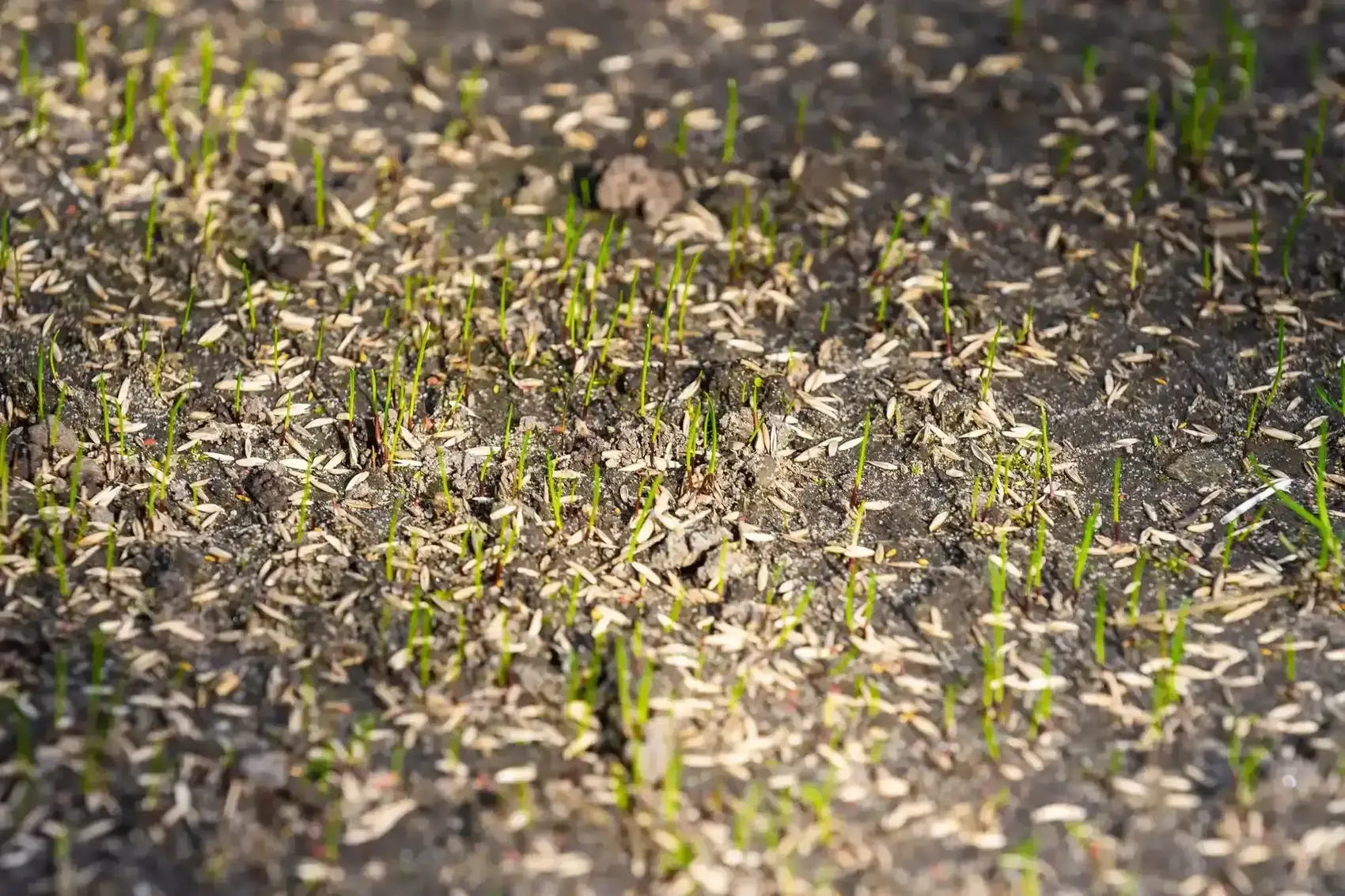
March is consistently inconsistent when it comes to weather. One week feels like spring. The next feels like winter again. And we know this, but still, every year, we jump on springtime chores and into dedicated lawn care routines the moment we can bare to be outside without snowboots.
Planting new grass seed is usually engrained in our mission. But doing it right? Well, that comes down to soil temperature, not the date on the calendar.
In many places, late March can work. In others, it’s still too cold or too wet.
Before you spread seed, check your soil, know your grass type, and understand what March really looks like in your region.
Is It Too Early to Plant Grass? It Depends on the Soil
Air temps in the 60s don’t mean much if the soil is still cold underneath. “Early March overseeding does have risks, as there can be too much soil moisture, which can cause seeds to rot,” explains Dr. Roger May, Director of Technical Operations – North at TruGreen. “Freezing overnight temperatures can also kill new seedlings. Seed also needs consistent temperatures, ideally around 50°F+ (10-13°C) for consistent, safe germination.”
He underscores the importance of checking your soil temperature: “If you must seed in March, aim for late March, ensure the soil is not consistently frozen, and work with your lawncare professional to select fast-germinating seeds.”
Location Changes Everything
Not surprisingly, location makes a difference. Soil warms at different speeds. Rain patterns vary across the country. Summer heat arrives sooner in Southern regions.

Southern/Southwestern Climates
“Early-spring can be ideal for laying grass seed in southern and southwestern climates, particularly for cool-season grasses (like tall fescue) to establish before intense summer heat,” shares Dr. May.
“For warm-season grasses (like Bermudagrass), it is better to wait until late spring as temperatures rise, although planting can begin as soil warms. You want to get seed established while temperatures are moderate (60–75°F day, 50°F+ soil) and before temperatures rise.”
- Early spring can be a strong window for cool-season grasses before intense summer heat.
- Soil often reaches 50°F+ sooner than in northern states.
- Getting roots established before temperatures spike is important.
Mid-Atlantic and Transition Zones
- Mid- to late March can work for cool-season grasses if soil temps are steady.
- Cold snaps are still possible, so watch nighttime lows.
- Moisture levels matter. Too much rain can cause seed rot.
Northern States
- Early March is usually too cold.
- Late March may still carry frost risk.
- April is often more dependable for cool-season seeding.
Grass Type Matters, Regardless of Geography
- Cool-Season Grasses (Fescue, Ryegrass): Mid-March through April overseeing allows for roots to establish before summer.
- Warm-Season Grasses (Bermuda, Zoysia) prefer warmer soil, so late spring to early summer is often better, but March/April is acceptable to start.

Will My Grass Seed Survive If I Plant It in March?
This is where expectations matter. March seeding can work; however, it comes with more risk than fall.
“Generally, Fall is the best time to introduce new seed into an existing lawn of cool-season grasses,” reports Dr. May. “The ground is typically warm and moist and grass seed does not have to compete with weed germination that takes place in the spring, making it an ideal time versus the spring.”
He adds, “Also, fall seeding gives the seedlings two cool seasons (Fall & Spring) to become established before their first summer.”
That doesn’t mean spring is a bad choice. It just means you’ll need to manage it closely. “Keep the seedings watered through the summer because they can quickly dry out,” notes Dr. May.
Weed control is another factor you should consider. “If you do decide to seed your lawn in early spring, you must forego the use of crabgrass preemergent because this will prevent the new seeds from emerging” he notes.
Skipping pre-emergent may mean more weeds. That’s part of the trade-off with spring planting. And remember, technique still counts.
“Overseeding can make a noticeable difference in the thickness, health and appearance of your lawn, but timing and technique matter,” he emphasizes. “From choosing the right season to pairing overseeding with aeration, a thoughtful approach helps set new grass up for success.”
FAQ
Can I overseed if my lawn is patchy from winter damage?
Yeah, go head, but only as long as soil temperatures are warm enough and the ground isn’t frozen. We always rake away dead grass first so the new grass seed can reach the soil. If you don’t have seed-to-soil contact, it’s not worth the investment.
How often should I water new grass seed in March?
Water the grass seed lightly and often at first to keep the top inch of soil moist. If it has been rainy and the soil is moist, no need to add extra moisture to the soil. Once seedlings appear you can shift to deeper, less frequent watering. The goal is steady moisture, not puddles, and you certainly don’t want to wash the grass seed away.

How do I know my soil temperature?
Don’t guess based on air temps. Use a soil thermometer and check in the morning for a few days in a row. You’re looking for consistent readings around 50°F or higher. Many local extension offices and weather services also post soil temperature maps online during spring.
Should I fertilize at the same time I seed in March?
Light starter fertilizer can help new seedlings grow strong roots, especially for cool-season grasses. That said, avoid heavy nitrogen applications, because it can push fast top growth before roots are ready. If you’re skipping crabgrass pre-emergent to allow seed to sprout, focus on good watering habits and mowing at the right height to help new grass compete.
