This article on Home Living Handbook might contain affiliate links. If you make a purchase through a link on the site, we may earn a commission.
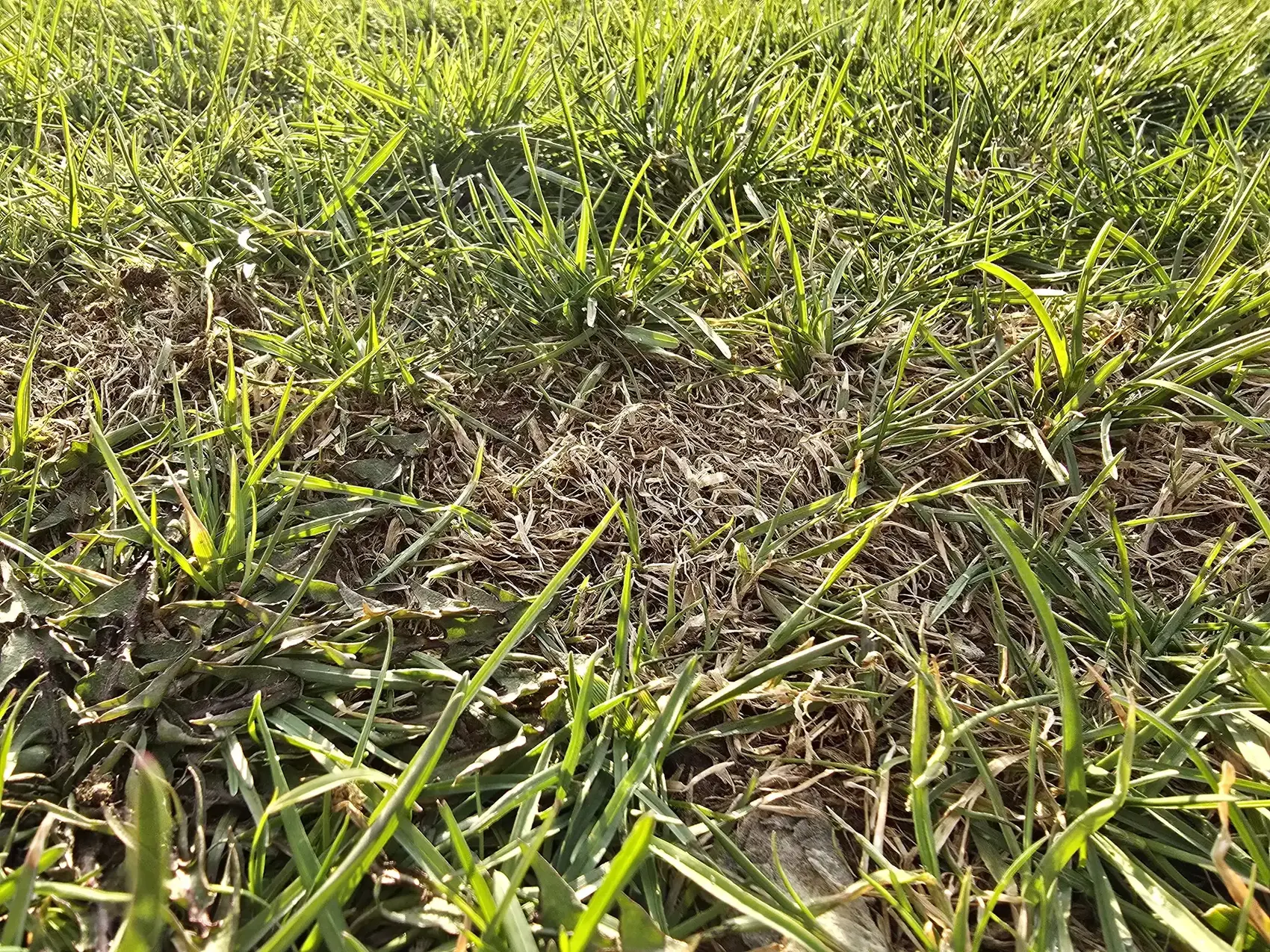
Thatch builds up slowly, so most people don’t notice it until the grass starts to struggle. In some cases, if you’ve waited too long, it’s too late.
Let’s start by remembering that a little bit of thatch is completely normal. Even helpful! The trouble starts when it gets too thick, and it builds up faster than it breaks down.
Good Thatch vs. Bad Thatch
A thin layer of thatch material (<0.5”) helps your lawn retain moisture and protects the soil.
A thicker layer (~0.75”-1.0”) can block water, nutrients, and prevent air from reaching the roots. Bradley Mowers described it as a hydrophobic layer. When your lawn thatch gets too thick, you’ll notice:
- It feels spongey underfoot
- Water pools during heavy rainfall; it doesn’t soak in the way it used to.
- Roots stay shallow instead of growing deep. (Getting a core sample from different areas of your yard can tell volumes.)
- The grass looks stressed even with regular care. In this case, the issue isn’t what you’re putting on the lawn (fertilizers, irrigation, etc). It’s what’s blocking it from getting down to the roots.
When the soil can’t break things down fast enough, a thatch later will get thicker, thicker, and thicker. It’s less about a lawn care mistake, and more about how organic material stacks up over time.

Fixing Thatch = Fixing Soil Issues
Thatch is usually tied to poor soil conditions. When soil is compacted, air can’t move through it well. That slows down the microbes that normally break down organic matter.
So instead of cycling back into the soil, that material just sits there and builds up. Fixing thatch often starts with improving the soil, not just removing the layer.
You don’t need any special tools (but if you have a core remover, it helps). Pull up a small section of grass and look at the layer between the green blades and the soil.
- <1/2 inch thatch layer: you’re fine, but monitor for thickening buildup.
- Around 1” thatch layer: your lawn is probably starting to have problems.

Aeration vs. Dethatching
Aeration doesn’t remove thatch completely, but it helps in a different way. It breaks up compacted soil and gives air, water, and microbes room to move again. That change below the surface helps the thatch layer break down over time. It’s more of a long-term fix than a quick one, but it addresses the cause, not just the symptom. If your lawn is prone to being compacted or you have ongoing thatch buildup issues, make core aeration a part of your annual lawn care routine.

If the thatch layer gets too thick, aeration alone won’t cut it. That’s when dethatching or using a scarifier makes sense. Keep in mind that you never want to try and remove all the thatch because it can leave your lawn exposed and prone to stress, especially during the summer months. And yes, dethatching is more aggressive (it pulls material up from the surface), which can make the lawn look rough for a bit. That’s normal. Luckily, most lawns don’t need this often. It’s something you do when the buildup is clearly getting in the way. It’s one of those instances when I think renting a dethatching tool is better than buying.

4 Ways to Reduce Thatch Buildup
- Water deeply, not constantly
- Don’t overdo fertilizer
- Aerate when soil starts to compact
- Mow at the right height
FAQ
How quickly does thatch build up?
It depends on how the lawn is cared for. In some cases, it builds slowly over years. With heavy fertilizing and frequent watering, it can build much faster.
Can grass clippings cause thatch?
Not usually. Clippings break down quickly and rarely contribute to thatch buildup. The bigger issue is root and stem material below the surface of your lawn.

Is dethatching something you do every year?
Not usually… it’s only needed when the layer gets too thick. Regular aeration and good lawn care habits go a long way (and can prevent thick thatch layers from ever building up).
