This article on Home Living Handbook might contain affiliate links. If you make a purchase through a link on the site, we may earn a commission.
Old plaster walls are solid and full of charm, but they don’t always stay flawless. Nail holes, structural changes, and accidental bumps can cause cracks in the plaster over time.
If you live in an older home with lath and plaster walls, no doubt that you’ll run into this eventually.
While it's a different process from repairing drywall damage, with the right plaster-repair products and a little patience, it's a totally manageable DIY project.
Tools and Materials
Before you start, cover the floor with a drop cloth or plastic drop cloths to keep dust and debris off your space. Then grab the essentials:
- Patching plaster like Wally’s Plaster Magic (this is like joint compound but better for matching existing plaster)
- Plaster of Paris, gypsum plaster, or Durabond 90 (for deeper fills)
- Veneer plaster or setting-type veneer plaster (for finishing)
- Mixing container, if necessary
- Putty knife and flat trowel
- Fiberglass mesh tape for cracks (go ahead, get the wide roll, you can cut it down to size)
- Sandpaper (120-grit or 220 grit) or a sanding block
- Paint brush or sponge (a grouting sponge works great)
- Vacuum cleaner or shop vacuum
- Drywall screws, plaster washers, or nylon tape (for loose areas)
- Concrete bonding agent or PVA glue
A quick safety note: use safety goggles and a sanding respirator when cutting or sanding plaster! It creates fine dust.
How to Fix Small Cracks in Plaster Walls
Hairline cracks are one of the most common issues with plaster surfaces. Here’s a simple repair process:
- Open the crack. Use a utility knife to score along the crack and remove weak material.
- Apply fiberglass mesh tape. Longer cracks hold better with fiberglass mesh tape or nylon tape underneath the patch.
- Fill with joint compound. Spread a thin coat with a putty knife, feathering out the edges. For stronger results, you can use a veneer plaster skim coat.
- Sand smooth. Once dry, sand lightly with 120-grit sandpaper.
- Prime and paint. Seal with primer, then touch up with latex paint.
If the crack keeps returning, use a bonding agent like Plaster Weld before applying filler. That helps new material grip old lime plaster or lime-based plaster surfaces.
Repairing Small Holes in Plaster
Small holes can be caused by nails or doorknobs. Consider this a quick DIY repair.
- Clean it out. Scrape away debris and dust with a putty knife. Use a vacuum cleaner to clear the edges.
- Dampen the hole. A damp sponge keeps the patch from drying too fast.
- Fill in layers. For shallow holes, use joint compound or spackling compound. For deeper holes, Plaster of Paris or UGL Plaster Patch dries harder.
- Smooth it out. Apply with a flat trowel or putty knife, letting each layer dry before adding more.
- Sand and finish. Sand smooth, then prime and paint.

How to Repair Holes in Plaster Walls (Bigger Repairs)
When a section of plaster breaks away, here’s the repair process:
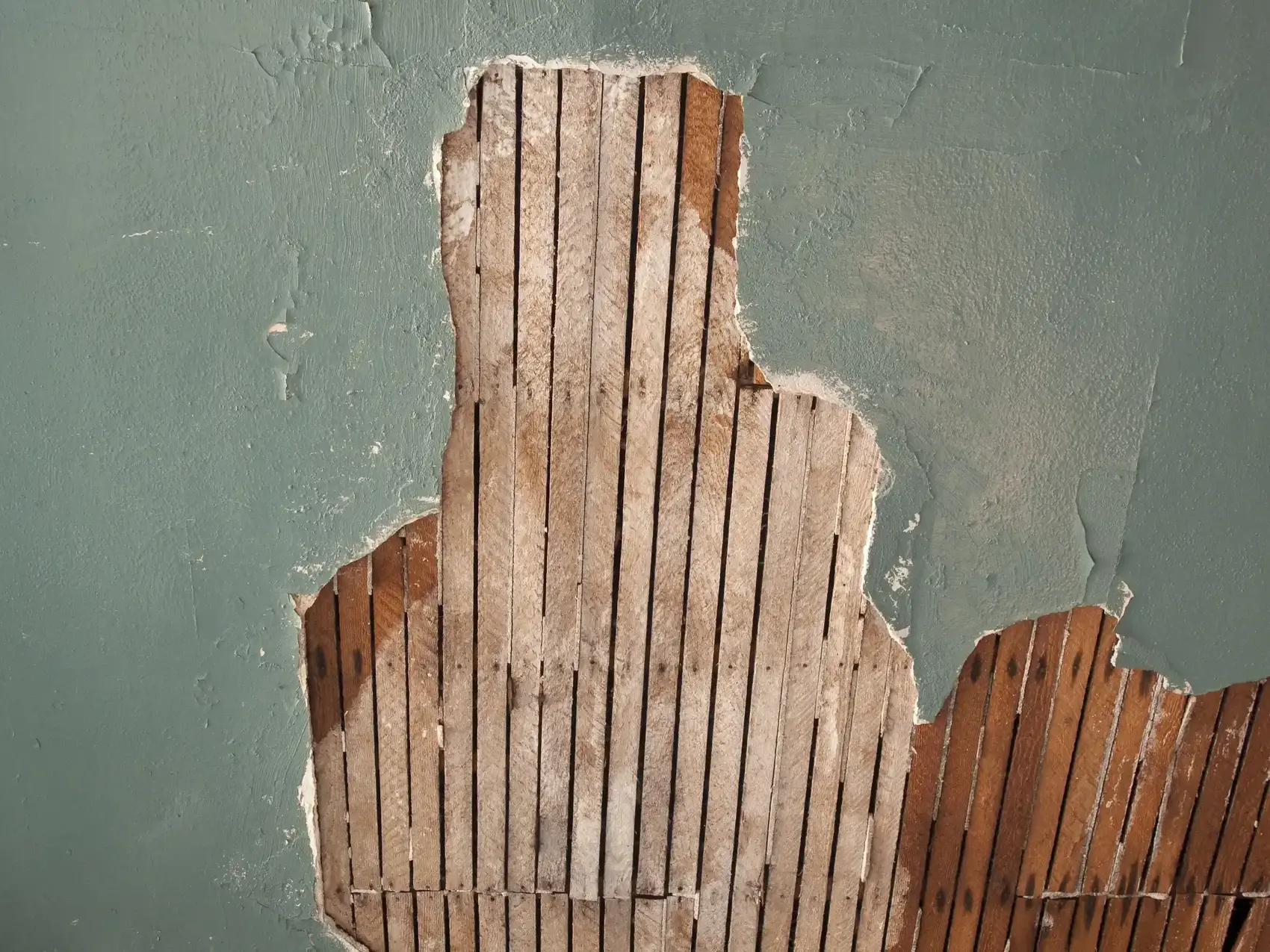
- Prep the area. Remove loose plaster and dust. Use a shop vacuum or vacuum cleaner to clean the lath.
- Check the lath. If the plaster is pulling away from the wooden lath, use drywall screws, plaster washers, or construction adhesive to pull it back tight. Some homeowners use Big Wally’s line of plaster-repair products, which include plaster adhesive and plaster conditioner.
- Apply a base coat. Use Plaster of Paris or a setting-type veneer plaster as a scratch coat. Press it into the lath or metal lath if reinforcement is needed.
- Build it up. Once firm, add a brown coat to level the surface. For very old homes, lime plaster or lime coat blends well with existing walls.
- Finish smooth. Top with veneer plaster or gypsum plaster to create a seamless surface.
- Sand and paint. Use 220-grit sandpaper for finishing; then prime and cover with latex paint.
Pro tip: For water damage, fix leaks before patching. Wet plaster won’t hold repairs, and the problem will come back.

FAQ
Is veneer plaster better than joint compound for repairs?
Yes, veneer plaster creates a harder finish than joint compound. It’s especially good for lath-and-plaster walls or when blending with lime plaster surfaces.
What if I have recurring cracked plaster in the same spot?
That may point to structural issues or ongoing water damage. If repairs keep failing, check for roof leaks, plumbing issues, or shifting walls before re-patching.
