Most homeowners never think about their water heater until it stops working. And, boy, when it goes, it goes fast. By then, the damage is usually done, and what could have been prevented with a simple annual flush now requires an expensive repair or worse, a full replacement.
The minerals and sediment that collect at the bottom of your tank don't just sit there harmlessly. They force your water system to work harder, waste energy, and wear out faster.
"Flushing the tank once a year is one of the simplest and most effective steps homeowners can take to extend the life of a water heater," shared Tom McConahay, Senior Manager of National Plumber Support at Rheem Manufacturing.
Think of it like changing the oil in your car... skipping routine maintenance will shorten the lifespan of the system.
How do I know if my water heater needs flushing right now?
If you're looking, you'll notice signs. Signs of sediment buildup include:
- Listen: Rumbling, popping, or banging noises during heating cycles.
- Watch: Rusty or discolored hot water coming from your taps.
- Wait: Longer wait times for water to heat up after heavy use. Also, you might experience a reduced hot water supply or lukewarm water when you expect it to be piping hot.
- Costs: Higher than normal energy costs... without explanation.

What Sediment Does to Your Hot Water Heater
Water carries minerals like calcium and magnesium. When your water heater warms that water, those minerals separate and settle at the bottom of the tank.
Over time, this sediment builds up into a thick layer that creates serious problems.
- In electric water heaters: sediment covers the lower heating element.
- In gas water heaters: sediment settles between the burner and the water.
Either way, the result is the same: your water heater has to run longer and hotter to do its job. McConahay explains, "This buildup forces the heater to work harder, leading to rumbling noises, higher energy bills, and even damage to the heating elements. [Buildup] forces the water heater to work harder and longer to heat the water, which wastes energy and puts undue stress on the components, which significantly shortens the lifespan of the entire system."
The layer of sediment acts like a blanket. It traps heat and creates hot spots that can weaken the steel tank and eventually cause leaks. It also makes your water heater louder. Those banging or knocking sounds? They come from bits of sediment rattling around as water boils underneath the layer.

Why an Annual Flush Solves Multiple Problems
Draining and flushing sediment from your tank addresses several issues at once.
"[We] recommend a simple annual flush as it solves several common plumbing issues and is critical to protecting your investment," notes McConahay.
"Removing the sediment stops the problems that cause this early breakdown. For example, it can reduce hot spots in gas heaters that lead to leaks and it can prevent damage to the lower heating element in electric models."
Flushing also improves your water heater's efficiency. When sediment blocks heat transfer, your water heater runs longer cycles and uses more energy to reach the same temperature. Clear out that barrier and recovery time drops... meaning you'll get hot water faster after someone takes a shower or runs the dishwasher.
Water quality improves too. "Sediment can impact the quality of the warm water used by a property's residents or tenants," McConahay says. "Flushing the contaminants helps ensure that the stored water remains clean and free from undesirable taste and odor. Plus, homeowners can often get rid of those annoying loud knocking or banging noises by clearing out the bits of sediment that bang against the tank sides during heating."
How to Flush Your Water Heater
You can hire a plumber or do this yourself in 15 to 30 minutes, according to McConahay. Here's how:
- Turn off the power or gas. For electric units, flip the circuit breaker. For gas units, turn the valve to "pilot light" or "off."
- Shut off the cold-water supply. Find the valve on the water line leading into the water heater and close it. This stops new water from entering while you drain.
- Open a hot-water faucet. Turn on a sink somewhere in your home. This allows air into the system so the tank can drain fully.
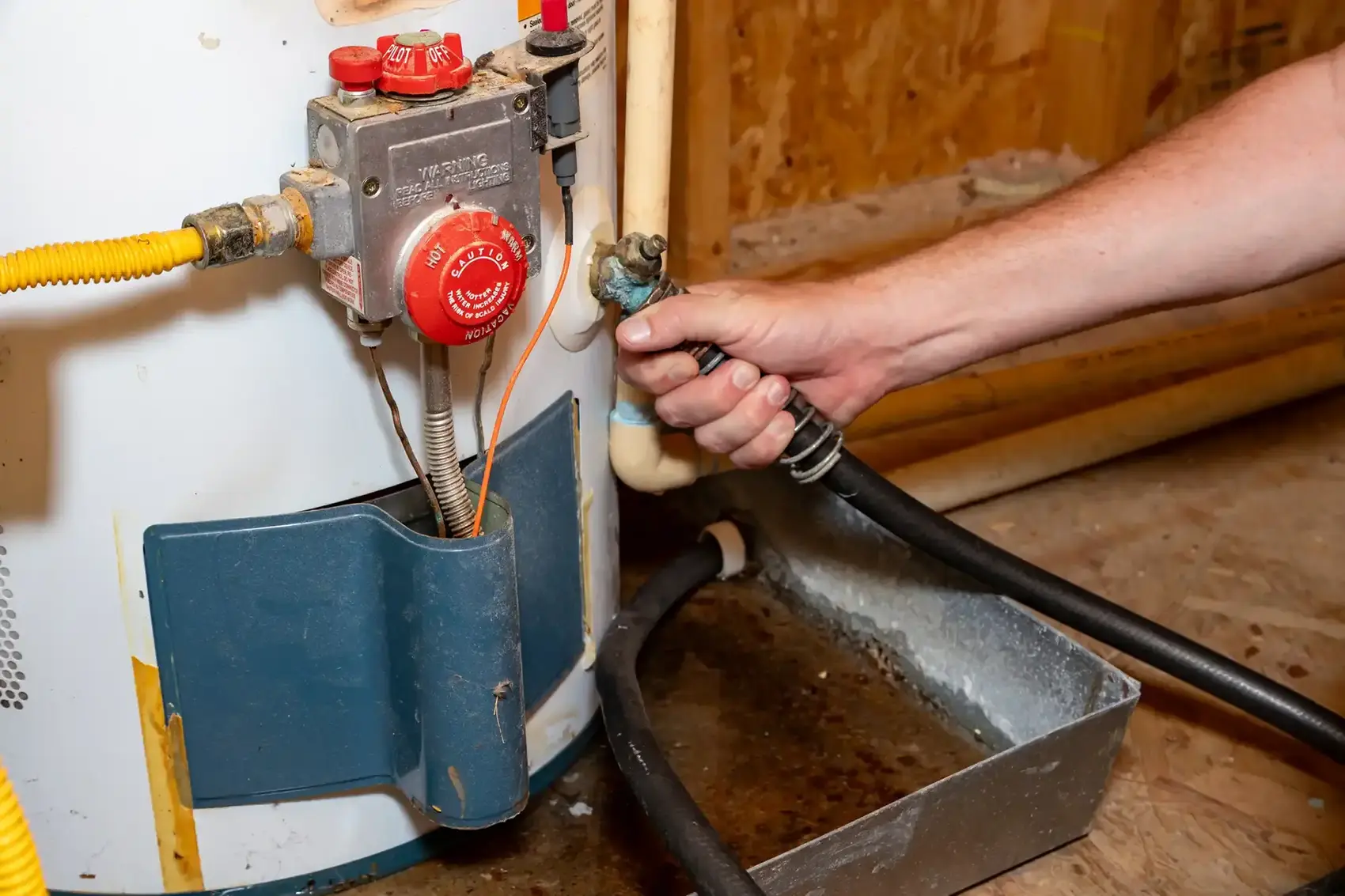
- Attach a garden hose. Connect one end to the drain valve at the bottom of the tank. Run the other end to a floor drain, sump, or outside where hot water won't cause water damage.
- Drain and flush. Open the drain valve (you might need a flathead screwdriver). Let the water run until it looks clear. Once most of the water has drained, open and close the cold-water valve 6 to 8 times in short bursts. This stirs up settled sediment and pushes it through the drain.
- Close and refill. When the water runs clear, close the drain valve and remove the hose. Turn the cold-water supply back on. The hot-water faucet you opened earlier will sputter as air escapes. Once it runs steady, turn it off.
- Restore power or gas. Turn the breaker back on or return the gas valve to its normal setting. Relight the pilot if needed. Check around the tank and drain valve for any leaks.
He adds that tankless water heaters require a different approach: "For homeowners with a tankless water heater, the process is a little more involved—because you'll typically need a special flush kit and possibly a pump or chemical cleaner in order to properly flush internal lines, and may be worth reaching out to a plumbing professional to help with the project."

FAQ
How often should I flush my water heater if I have hard water?
If your area has particularly hard water, consider flushing twice a year. Heavy mineral content accelerates sediment buildup and can reduce your water heater's lifespan even faster.
Will flushing my water heater void the warranty?
No. Most manufacturers recommend annual maintenance and flushing specifically. Skipping it could actually void coverage if neglect causes damage.
Can I flush my water heater tank if it's never been done before?
Yes, but older tanks with years of buildup may release large chunks of sediment that clog the drain valve. If the valve won't close after draining, you might need a professional plumber to replace it—but clearing a mineral deposit blockage is still cheaper than replacing the entire unit.
